
News

Macronutrients also known as Macros

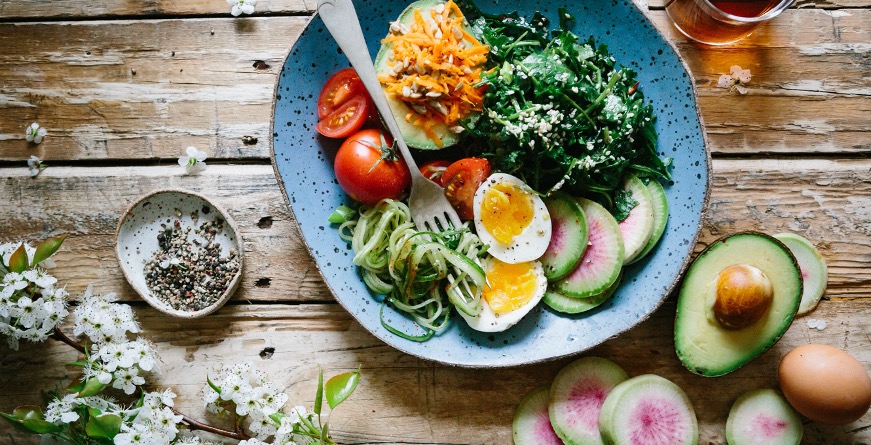
image of food on table, vegetables, avocado, egg.

Key Macronutrients – energy yielding nutrients.

Below are some food choices that have been divided up into Complex Carbs, Good Fats and Protein. These are essential foods that give your body a lot of what it needs for energy, repair and growth.

Carbohydrates (Carbs)

  • Oats
  • Sweet potato
  • Brown rice
  • Quinoa
  • Green vegetables
  • Wholemeal pasta
  • Fibre rich fruits such as apples, berries and bananas
  • Beans

Essential Lipids (Good fats)

  • Avocados
  • Coconut oil
  • Extra virgin olive oil
  • Salmon
  • Nuts
  • Whole eggs
  • Chia seeds
  • Dark chocolate

Protein

  • Eggs
  • Almonds
  • Chicken breast
  • Cottege cheese
  • Greek yoghurt
  • Milk
  • Lean beef
  • Tuna
  • Quinoa
  • Whey protein supplements
  • Lentils
  • Turkey
  • Fish
  • Brussel sprouts
  • Peanuts
  • Tofu

Carbohydrates

Carbohydrates, in the form of simple or complex, are the body’s main source of energy providing 4 calories per gram.

Simple carbohydrates are those that cannot be broken down into simple sugars. These include various forms of sugar such as glucose and fructose.

Complex carbohydrates are larger and consist of sucrose, lactose, maltose, starch, amylose, and amylopectin.

The human body uses carbohydrates in the form of glucose and can convert both simple and complex carbohydrates into energy very quickly. The liver and muscles store glycogen, a complex carbohydrate that the body can rapidly convert to energy. Muscles use glycogen during periods of intense physical activity.

Carbohydrates have two major roles: they are the primary energy source for the brain and they are a source of calories to maintain body weight. If muscle and liver glycogen stores are full, excess carbohydrate will be converted and stored as fat.

Proteins

Proteins, also provide 4 calories per gram, are broken down into amino acids, which are the building blocks that we use to grow, repair and replace tissue.

Protein is not generally stored if consumed in excess; however, a large excess of protein can be converted and stored as fat in the body.

Protein is spared for muscle growth and maintenance and other essential functions and is not usually broken down and used for energy. When carbohydrate and fat are depleted, protein can be used for energy. This is not desirable as it causes muscle atrophy.

Sources of protein include meat, poultry and fish, eggs, dairy products, seeds, nuts, beans, and lentils.

Fats

Fats, the most energy rich source of food providing 9 calories per gram, play vital roles in hormone production, nerve conduction, organ protection and energy storage.

Fats are stored as adipose tissue, which is fat tissue. This can be under the skin, surrounding organs, or can be stored between muscle cells as free fatty acids. As fats are such an energy rich macronutrient it makes it a very effective fuel source. However, fats take longer to break down into a usable form than carbohydrates so exercise needs to be of lower intensity for fat to be used as fuel.

Fat is an important part of a healthy diet. However, some fats are better than others. Saturated fats increase blood cholesterol, whereas mono-unsaturated fats lower blood cholesterol. Trans-fatty acids are potentially harmful and are used to make baked products, pies, cakes, biscuits and buns. Omega -6 and omega-33 are oils found in fish and can benefit health.

Low intensity, long duration, aerobic activities are usually fuelled by fat where there is enough time to convert fat into fuel. Most food we eat contains a mixture of all three macronutrients. Due to their different roles as well as their different chemical compositions we require different percentages of each in an overall healthy diet.

A very general recommendation is that 45-65% of your daily caloric intake comes from Carbohydrates, up to 10-20% comes from fats and the 20-30%from protein.


 

Share this article

30-20-2 explained by one of our fabulous trainers, Liv. 💪

If you want to get more movement in your life, come chat to one of friendly team members about how we can help you get your 30-20-2 in 2026. 

#PARCFrankston  #Movemorein2026
GIVEAWAY 🙌🏊‍♀️

Attention PARC Members! 
We have two complimentary entry into the Frankston Swim Classic on Saturday 7 February. Tell us why you want to join the Classic in the comments, and go into the draw to receive 1 of these complimentary entries. We will draw the winners on Friday 16 January.

About the Frankston Swim Classic:
When: Saturday 7 February 2026
What: Three events - 400m, 1.2km and 2.5km swims

👉 Registrations via the Frankston Swim Classic website https://www.frankstonswimclassic.com.au/ 

#PARCfrankston #frankstonswimclassic #bayswim #oceanswim
A tropical adventure awaits you on Splash Island! 🌺🏝️ 

Book your spot on our giant, inflatable obstacle course, Splash Island! Slip and slide your way down its slopes, and tiptoe across balance beams – it’s the perfect aquatic challenge for adults and kids alike! 

📅 Dates: Monday 5 January – Friday 23 January 
🕒 Time: Weekdays 11am – 3pm
🤩 Cost: $6.50 per person (for Splash Island, plus pool entry) 
🎟️ Bookings: Required for Splash Island—reserve your spot through PARC’s Customer Portal. 


#splashisland  #PARCFrankston #schoolholidays #frankston
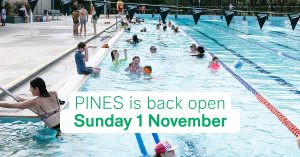
Our sister Centre, PINES, are extending their opening hours! 🥳

PINES' opening hours will be extended for the months of January and February 2026.

The updated hours for January and February are:
– Monday – Friday, 6am – 8pm 
– Weekends and public holidays, 8am – 7pm 

By extending the our opening hours into the evening, we are able to provide more access to the public so you can get your laps in, or just enjoy a dip in the pool later in the summer evening.

The change in hours are adjusted for January and February 2026 only.

Can't wait to see you all there!
Move more in 2026 with 30-20-2 💙

Life is busy, and finding time to exercise can feel overwhelming. Being active isn’t about pushing yourself to the limit — it’s about moving consistently and finding a balance that works for you. And you don’t have to do it alone.

Introducing 30-20-2, our simple movement guide based on the Australian Physical Activity Guidelines, designed to make movement achievable and part of everyday life.

Here’s what it means. 

Adults in Australia should aim for: 

30 mins moderate activity daily 🚶‍♂️🏊‍♂️
Moderate activity means you’re moving, breathing comfortably, and able to speak in full sentences. Think swimming, a brisk walk, or joining a PARC class. 

OR 

20 mins vigorous activity daily 🏃‍♂️🚴‍♂️
Vigorous activity gets your heart pumping—you’re breathing hard and speaking in short bursts. Try a cycle class, HIIT session, or a gym workout. 

AND 

2 strength sessions per week 💪🏋‍♂️
Build strength with resistance training. Try lifting weights the gym, or a Reformer Pilates class. 

Throughout 2026, we’ll support you with the right mix of classes, programs, and expert guidance to help you move more, your way.

Come and talk to our friendly team about becoming a member today.
Today is National Personal Trainer Day! 🏋️

At PARC we have an incredible team of Personal Trainers, ready to help you achieve your goals in 2026. 

Come on down, and speak with one of our fabulous trainers about achieving your goals today!

#nationalpersonaltrainerday #personaltraining #PARCFrankston
Bookings are now open for Splash Island! 🏝️

Slip and slide your way into adventure. Book your spot through our Customer Portal today!

📅 Dates: Monday 5 January – Friday 23 January 
🕒 Time: Weekdays 11am – 3pm
🤩 Cost: $6.50 per person (for Splash Island, plus pool entry) 

#PARCFrankston #SplashIsland #SchoolHolidays #Frankston #Melbourne

Recent articles